
First-Time Car Buyer: Your Guide to Buy Your First Car
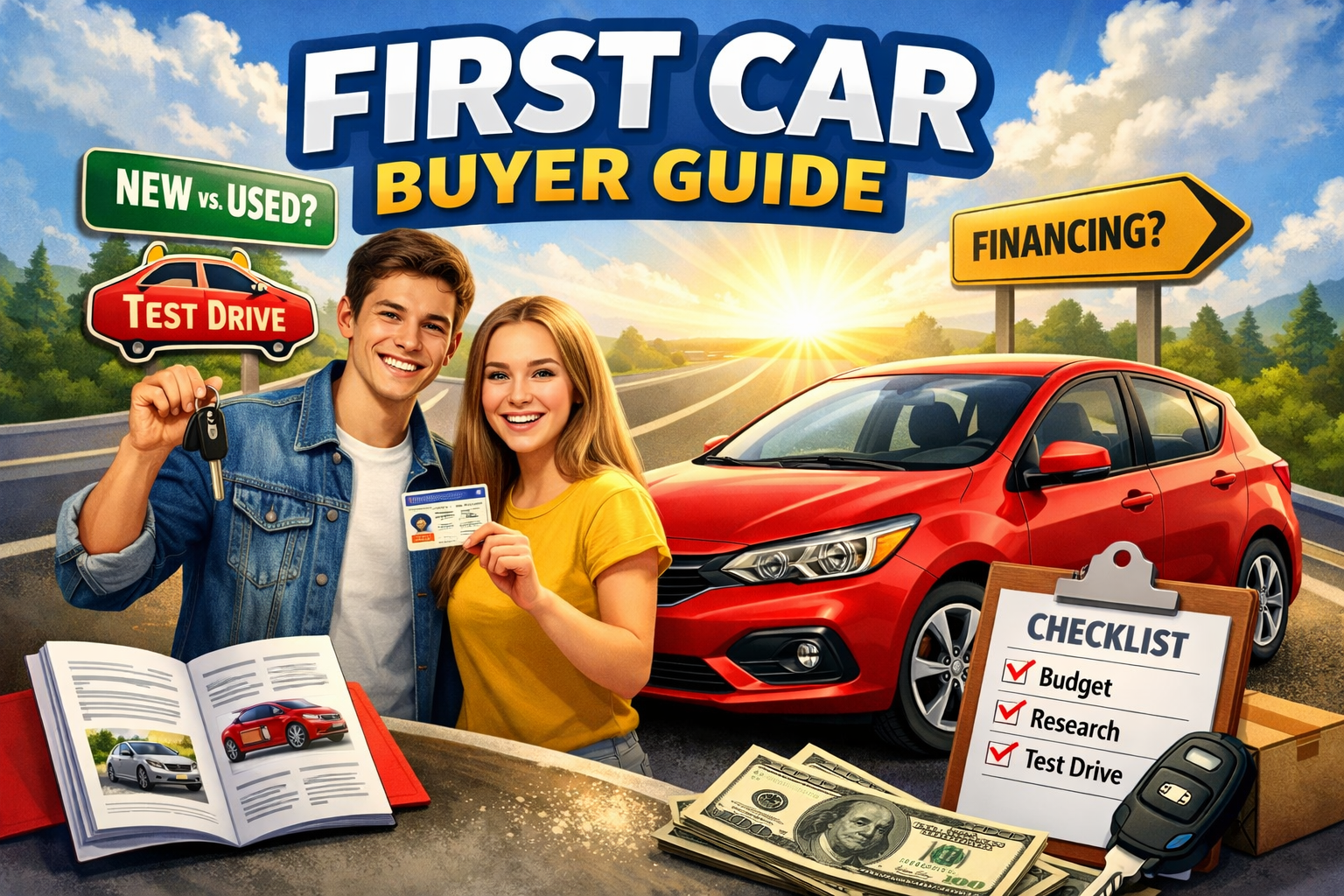
Buying your first car is a major milestone. Whether you plan to buy a new car or a reliable used car, understanding financing, dealership tactics, and maintenance will help you make informed choices. This first-time car buyer guide covers everything you need to know before you hit the lot so you can feel confident about the car purchase and the monthly car payment you’ll accept.
1. How do I decide between a new car and a used car when shopping?
Choosing new or used comes down to budget, expected depreciation, and the car you want. A new vehicle often carries higher price of the car and faster initial depreciation in the first five years, while a used vehicle can provide better value and lower monthly car payments. Consider whether the peace of mind of factory warranty and new model features outweighs the savings that come with buying used.
Think about total cost: the car purchase price, insurance, maintenance, and the car loan interest rate. If you have better credit you may qualify for lower financing rates on either new and used cars, especially from a bank or credit union. For first-time buyers, a certified pre-owned option can be a middle ground: newer, inspected used cars with a warranty that reduce uncertainty about the car’s condition.
2. What should a first-time car buyer know about financing and car loan options?
Financing is central to your car-buying process. Compare offers from dealerships, banks, and credit unions to find the best car loan rate. Credit score and credit history heavily influence your car loan rate: a higher credit score often yields better financing terms and lower monthly car loan payment. Getting pre-approved gives you negotiating power at the dealership and allows you to know exactly what you can afford.
When calculating monthly payment, factor the loan term, interest rate, and whether you plan a larger down payment. A longer loan reduces the monthly car payment but can increase total interest paid and risks owing more than the car. Consider a balance between comfortable monthly car payments and a realistic timeline to pay off the car without straining your budget.
3. How do dealerships set prices and what should I expect when I go to a dealership?
Dealerships price cars based on market demand, vehicle condition, and inventory needs. New car pricing often includes incentives, rebates, and destination fees, while used car dealers price based on the car’s history and local demand. When you go to the dealership, know the value of the car you want and the price of comparable vehicles so you can negotiate confidently.
Expect upsells at the dealership like extended warranties, add-ons, and gap insurance. Separate the vehicle price from financing and trade-in discussions—this keeps you focused on the price of the car itself. If you’re buying from a dealer, ask for a breakdown of fees and consider checking the car’s value on trusted sites to verify the dealer’s asking price.
4. How does my credit score affect my ability to buy a new car or used car?
Your credit score determines what financing offers you get. Better credit typically secures lower interest rates and more favorable loan payment terms. First-time buyers with limited credit history may benefit from building their credit through a credit union, using a co-signer, or taking out a small secured loan before applying for a larger auto loan.
Review your credit report before shopping so you know your credit history and can dispute any errors. Improving your credit or choosing a shorter loan term can reduce the amount you pay in interest, but may increase the monthly car payment. Balance short-term affordability against long-term cost to find the right financing approach.
5. What are the advantages of getting pre-approved for financing before I buy my car?
Getting pre-approved from a bank or credit union gives you clarity on the loan payment you can manage and makes you a stronger car buyer at the dealership. Pre-approval simplifies the buying process, helps you stick to a budget, and prevents dealerships from steering you into higher-rate financing. It also helps you compare dealership financing offers effectively.
Pre-approval reveals your likely interest rate, the maximum loan amount, and the monthly car payment estimate. Armed with this information, you can negotiate the car’s price rather than the monthly figure alone. Consider this an essential step for first-time car buyers who want to proceed with confidence and avoid unexpected issues when completing the paperwork.
6. What should I look for when buying used: inspections, history, and value?
When buying used, obtain a vehicle history report, look for service records, and have a trusted mechanic inspect the car. Check for title issues, prior accidents, and whether the car was regularly maintained. A thorough inspection can uncover problems that affect the car’s safety, the value of the car, and future maintenance costs.
Compare the asking price to market values to determine if the dealer’s price is fair. Consider common issues for the make and model, expected repair costs in the first few years, and total cost of ownership. Reliable cars often cost more upfront but save money on repairs and keep monthly costs predictable for first-time buyers.
7. How much should I plan to put down and how does a larger down payment help?
A larger down payment reduces your loan amount, lowers your monthly payment, and decreases the risk of becoming upside down (owing more than the car). Aim for at least 10–20% down if possible; more than that will reduce interest paid over the life of the loan. For first-time car buyers, a larger down payment makes financing easier and can improve your loan terms.
Putting more down can protect you from immediate depreciation that often occurs when you buy new. It also reduces the chance you’ll need to roll negative equity into a future car purchase. Work out different scenarios to see how down payment size affects monthly car payment and overall cost so you can choose an affordable option.
8. Should I trade in my current car or sell the car privately?
Trade-ins simplify the buying process because the dealership handles the paperwork and applies the value toward your new purchase. However, used car dealers may offer less than a private sale. Selling the car privately can yield a higher price, improving your down payment and lowering your loan amount.
Weigh convenience against price. If you need to buy your car quickly, a trade-in at the dealership can make sense. If maximizing the value of your current car is important, prepare it for sale, set a competitive price, and be ready to negotiate. Either way, know the trade-in value beforehand to avoid accepting low offers.
9. How do I estimate ongoing costs like maintenance, insurance, and registration?
Calculate the total cost of ownership beyond the purchase price. Cars need to be maintained regularly, and the first five years can include scheduled maintenance, tire replacement, and occasional repairs. Insurance rates vary by car, age, and driving history—get quotes before buying. Registration and taxes also add to first car purchase costs.
Consider fuel economy, expected reliability, and parts availability when choosing a car. A slightly more expensive but reliable model may cost less to maintain and insure over time. For first-time buyers, building a maintenance fund and following the manufacturer’s recommended service schedule will help you keep the car in good condition.
10. What are practical car buyer tips for negotiating and finalizing the deal?
Start negotiations from the vehicle price, not the monthly car payment. Use research on invoice and market prices, and be ready to walk away if the terms aren’t right. Get any verbal promises in writing and review the contract for add-ons you didn’t agree to. Ask questions about warranties, return policies, and dealer fees before signing.
Inspect the car on delivery, confirm that promised repairs were completed, and ensure that documents like title and registration are correct. If financing through the dealership, compare the final offer to your pre-approval. These car buyer tips help first-time buyers navigate the buying process with confidence and avoid regret after taking the car home.
11. How will I know if I’m choosing the right car and enjoying my new or used vehicle?
Choosing the right car means matching the vehicle to your daily needs, budget, and longer-term goals. Test drive the car in real-world conditions, assess comfort, visibility, and whether the car can handle your commute and lifestyle. Think about the car you want versus what you actually need—this balance will help you enjoy your new vehicle without overpaying.
After purchase, maintain your car according to the schedule, keep records of service, and monitor any unusual sounds or warning lights. Whether you buy new or used, a proactive approach to maintenance keeps the car reliable and preserves its value if you decide to sell the car or trade it in for your next car.
12. What should first-time buyers do after they buy the car to protect their investment?
After you buy the car, register a car in your name, update insurance, and keep all purchase and financing documents in a safe place. Follow a regular maintenance plan and address recalls or service bulletins promptly. Keeping the car well-maintained protects its value and reduces long-term ownership costs.
Monitor your car loan payments and avoid missed payments to improve your credit history. If you plan to sell the car later, maintain service records and clean the car regularly to maximize resale value. These simple steps help first-time buyers protect their investment and enjoy a smoother car ownership experience.
13. How do I balance buying the car I want with financial responsibility?
Buying the car of your dreams is exciting, but financial responsibility means setting realistic boundaries. Establish a total budget for the car purchase, including taxes, fees, and ongoing costs. If the car you want pushes your finances too far, consider alternatives like a used version of the same model, a smaller loan, or delaying the purchase until you save a larger down payment.
Use tools like monthly car loan payment calculators to see how different loan terms and down payments affect your budget. Balancing desire and practicality will ensure your first car purchase is a positive experience, not a financial burden.
14. Where can I find good car deals and reliable used cars for sale?
Search across dealerships, online marketplaces, and local listings to compare car deals and used cars for sale. Certified pre-owned programs at dealerships often provide added confidence. Check reviews and ratings for used car dealers and verify service records and inspections before you buy.
If possible, work with reputable used car dealerships or independent dealerships with strong customer service. Local credit unions and banks can also offer competitive financing that, combined with a fair purchase price, results in a great overall deal for first-time buyers.
15. What final steps should a first-time car buyer take before taking the car home?
Before you take the car, confirm paperwork, insurance, and any financing terms. Inspect the car one more time, verify that agreed repairs or detailing are done, and get copies of all contracts. Understand the warranty coverage and service expectations for new and used cars.
Make sure the dealer registers the car if required, or get the registration forms you need. Arrange to make your first car payment on time and set up autopay if helpful. These final steps ensure a smooth transition from shopping for a car to owning one.
Conclusion
First-Time Car Buyer’s Guide: Everything You Need to Know Before You Hit the Lot sums up the key steps: research new and used options, check your credit score, get pre-approved, inspect used vehicles, negotiate price, and plan for ongoing costs. Follow these car buyer tips to make a confident, informed car purchase that matches your needs and budget.
When you’re ready to shop for reliable used cars for sale, consider trusted local options like Integrity Autoplex, a Used Car Dealership in Elkhart, IN. Integrity Autoplex is among reputable used car dealers that can help first-time buyers find the right car while offering transparent pricing and financing options. Whether you’re comparing dealerships or exploring certified pre-owned vehicles, use this guide to buy your car wisely and enjoy the buying experience.
Frequently Asked Questions
What should I check before buying my first car?
Verify vehicle history, inspection, test drive, financing options, insurance rates, and total out-the-door cost.
Should I buy new or used as a first-time buyer?
Used cars save money on depreciation; new cars offer warranties and lower maintenance—choose based on budget and risk tolerance.
How do I negotiate the best price?
Research market prices, get preapproved financing, be willing to walk away, and focus on out-the-door price rather than monthly payments.